0 item(s)
View cart
You have no items in your shopping cart.
In recent years, the way households and businesses interact with their drinking water has evolved significantly. Modern technological advancements have provided highly efficient methods for ensuring that tap water is consistently clean and safe for consumption. One of the most reliable and historically proven methods is the ceramic water filter.
While the concept of using porous earth to purify water dates back centuries, modern engineering has refined the process. Today, integrating a ceramic water filter into a hydration system offers a unique blend of mechanical efficiency, durability, and environmental sustainability.
Understanding the mechanics behind ceramic filtration highlights why it remains a prominent choice in water purification. The core functionality relies on the microscopic pores inherent in fired ceramic material. When unfiltered water is introduced to the system, gravity gently pulls it through the dense ceramic shell.
Because the pores are incredibly small—often less than half a micron in diameter—larger physical contaminants are effectively blocked. This simple yet highly effective sieving process physically traps bacteria, protozoa, and suspended sediments on the outer surface of the filter.

One of the primary advantages of ceramic water filters is their ability to remove harmful biological pathogens without relying on harsh chemicals. While they block dangerous microorganisms, the ceramic material naturally allows essential trace minerals like calcium and magnesium to pass through.
Furthermore, many modern ceramic filters incorporate a secondary layer of activated carbon within their hollow core. This inner core addresses dissolved contaminants like chlorine, significantly improving the taste and odor of the resulting drinking water.
As the focus on environmental conservation grows, ceramic filters present a highly sustainable alternative to single-use plastics. Because they are manufactured from naturally occurring earth, they do not introduce synthetic materials into the environment. Their extended, reusable lifespan dramatically reduces the volume of filter waste generated by a household each year.

Unlike standard pleated paper or loose carbon filters that must be discarded once clogged, a ceramic filter can be physically cleaned. When the flow rate slows down due to trapped sediment, users can simply scrub the outer surface under running water to restore its efficiency. This durable characteristic allows a single ceramic cartridge to provide safe drinking water for many months.
Reverse osmosis (RO) systems are highly effective at removing almost all dissolved solids, but they can generate significant wastewater and strip away healthy minerals. Ceramic filters are highly water-efficient, producing zero wastewater while preserving essential dietary minerals. For those who specifically require 100% pure, demineralized water, utilizing Ace water distillers is a highly effective, wastewater-free alternative to RO systems.
Standard carbon filters are excellent for removing municipal chemicals like chlorine, but they are generally less effective against physical bacteria and protozoa. Ceramic filters fill this vital gap by providing a strict mechanical barrier against biological threats. Combining both technologies within a single unit offers the most comprehensive protection.
Ultraviolet (UV) light systems neutralize bacteria and viruses by scrambling their DNA, but they do not physically remove suspended particles or heavy metals from the water. Furthermore, UV systems require a continuous electrical supply to function. Ceramic gravity filters operate entirely without power, making them highly reliable during outages or in remote locations.

In the face of growing concerns over municipal water safety and environmental waste, ceramic water filters offer a practical, time-tested solution. Their ability to deliver high-quality, mineral-rich hydration without ongoing electricity costs makes them an excellent addition to modern households.
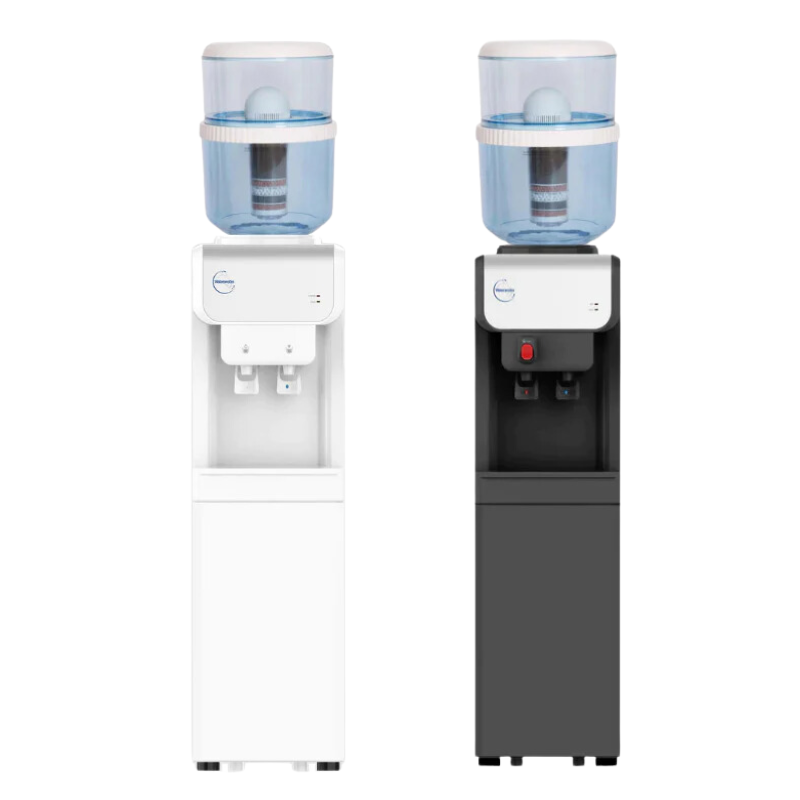
This natural purification technology can also be easily integrated into commercial environments. By utilizing refillable ceramic filtration bottles on top of bottled water coolers, offices can provide endless chilled water while simultaneously reducing their plastic footprint.
You should clean the ceramic filter whenever you notice a visible reduction in the water flow rate. As the microscopic pores trap sediment and impurities, the flow will naturally slow down. A gentle scrub under running water will clear the pores and restore optimal flow.
Standard ceramic filters do not remove dissolved minerals like fluoride. However, specialized ceramic cartridges are available that incorporate fluoride-reduction media in their core. Alternatively, water distillation is highly effective for complete fluoride removal.
While cleaning extends the lifespan of a ceramic filter, the abrasive action slowly wears away the ceramic shell over time. Most manufacturers recommend completely replacing the filter cartridge every 6 to 12 months, or sooner if the ceramic wall becomes noticeably thin.