0 item(s)
View cart
You have no items in your shopping cart.
An activated charcoal water filter can significantly reduce unpleasant tastes, odors, and chlorine levels in your drinking water. Municipal water treatment plants frequently use chlorine and chloramines, which can leave a lingering chemical taste and produce harmful byproducts.
Carbon excels at removing these organic molecules, ensuring that water tastes and smells much cleaner. As water passes through, contaminants adhere to the carbon's surface, allowing only purified water to flow into your home.
Carbon filters operate primarily through a process known as adsorption. Unlike a sponge that absorbs water into its volume, adsorption causes particles to stick directly to the surface of the carbon medium.
Organic substances bind to the carbon because both the water and the pollutants contain polar molecules that naturally attract one another. Because activated carbon is highly porous and features a massive surface area, it acts as a highly effective trap for these undesirable particles.
Filtration efficiency is heavily influenced by the filter's pore size, which is measured in microns. Additionally, lower flow rates give pollutants more time to stick to the carbon, resulting in a much finer and more thorough filtration process.
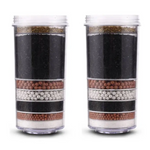
Granular Activated Carbon (GAC) filters consist of cylindrical canisters filled with loose carbon particles. As water flows through the container, these loose particles filter out contaminants.
However, GAC filters are prone to a phenomenon called "channeling." Water tends to follow the path of least resistance, bypassing some carbon particles and reducing the overall efficiency of the system.
This channeling effect can also lead to microbial growth over time. Areas of immobile, unutilized water within the filter can create pockets where bacteria may thrive.
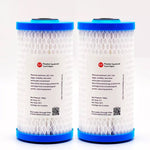
Solid carbon block filters are made of densely packed carbon particles compressed into a single, uniform block. As water is forced through the microscopic pores of the block, an extensive range of pollutants is eliminated.
The primary advantage of carbon block technology over GAC is the complete elimination of channeling. Every particle of carbon is firmly in place, ensuring the entire block is utilized for maximum contaminant removal.
While highly efficient, these tightly packed blocks do slow down the water flow rate. This makes them less ideal for municipal applications but perfect for household water filters where steady, clean drinking water is prioritized.
Activated carbon water treatment is generally deployed to achieve two main objectives. Each targets specific impurities in distinctly different ways.
Activated carbon removes chlorine quickly and efficiently with minimal degradation to the carbon itself. This rapid dechlorination process allows for high water flow rates in residential setups.
However, over time, the organic matter in the water will eventually clog the carbon pores, reducing its effectiveness. When this happens, the filter cartridge must be replaced to maintain water quality.
When water passes through the filter, organic chemicals are trapped via adsorption. The effectiveness of this process relies heavily on five key factors:
Thermal activation transforms raw organic source material into activated carbon using extreme heat and hot gases. Following heat exposure, steam is frequently applied to help open the microscopic pores within the carbon.
This process relies on moisture reduction, volatile reduction, and carbonization. It is typically carried out in an inert atmosphere using argon, nitrogen, or carbon dioxide.
Chemical activation involves treating the raw carbon source with specific chemicals prior to carbonization. These chemicals are usually strong acids, bases, or salts.
Once the chemical is introduced, the material is heated to a high temperature, allowing the carbon structure to activate almost instantaneously. This creates the highly porous surface needed for effective filtration.
Activated charcoal remains one of the most reliable and effective methods for removing organic pollutants, chemical odors, and unpleasant tastes from tap water. Whether integrated into an under-sink system or used inside freestanding bottled water coolers, it provides a simple, natural way to ensure your drinking water is clean and refreshing.
Absorption is like a sponge soaking up water into its entire volume. Adsorption, which is how carbon filters work, involves particles sticking specifically to the outer surface of the carbon medium, much like Velcro.
Carbon block filters are made of densely compressed carbon particles. Because the pores are so tightly packed together to prevent water from bypassing the filter, the water takes longer to push through, resulting in a slower but much more thorough filtration process.
Standard activated carbon is excellent at removing chlorine, odors, and organic compounds, but it is not typically effective at removing dissolved minerals, salts, or heavy metals. Specialized filters or distillation methods are required for heavy metal removal.
Replacement times vary based on water usage and the specific contaminants in your local water supply. However, most household carbon filters should be replaced every 6 months to prevent the carbon pores from becoming fully clogged and to minimize bacterial growth.