0 item(s)
View cart
You have no items in your shopping cart.
Securing a reliable hydration station is critical for maintaining peak performance in homes, offices, and schools. Countertop hot and cold water coolers offer a high-performance, space-saving alternative to traditional freestanding units, delivering precise temperature control and advanced filtration directly from your counter space.
Whether you require a system to refill reusable water bottles or supply instant hot water for beverages, evaluating the specific technical features of these dispensers ensures you select a unit capable of meeting your daily volume demands.
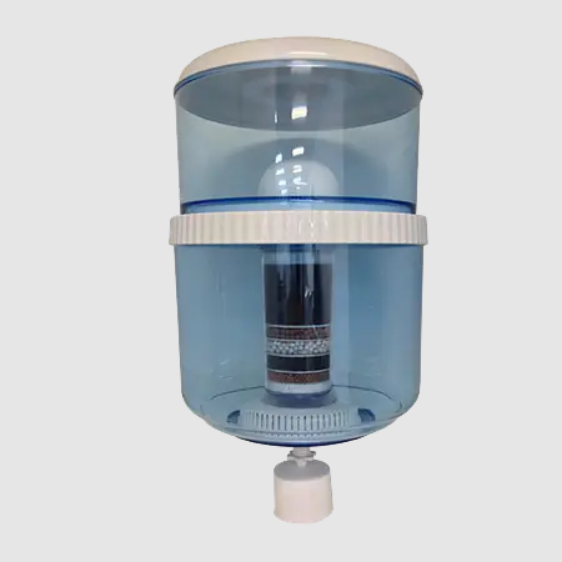
When configuring a hydration system for your facility, specific hardware features and operational mechanics must be assessed:
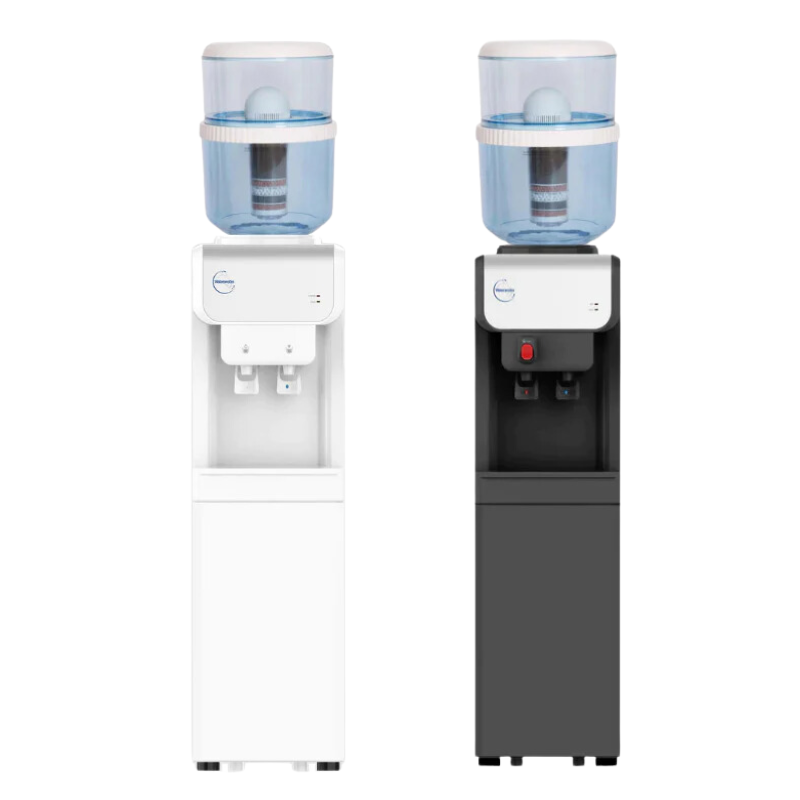
Determine your preferred water intake mechanism. Dispensers are engineered in two primary configurations: top-fed (bottled) or point-of-use (plumbed-in). Top-fed units are highly versatile and accommodate standard 15L to 20L bottles, such as the Ace 20-Litre Filter Bottle. Plumbed-in variants require a direct connection to your municipal water line, offering an uninterrupted supply.
The internal components of your dispenser dictate the water's final chemical composition and taste. Look for systems constructed with food-grade stainless steel internal reservoirs. Stainless steel, alongside porcelain or glass exteriors, prevents the leaching of dangerous chemicals and metals, ensuring maximum longevity and purity.
Even treated city water can accumulate heavy metals, bacteria, and grit through aging infrastructure. Premium countertop coolers integrate multi-stage filtration systems—such as carbon blocks or reverse osmosis (RO) membranes—to intercept these contaminants at the point of dispensing, returning the water closer to its natural state.

Assess the unit's thermal capabilities. High-quality countertop models feature built-in, highly efficient compressors that actively chill water (typically down to 4°C - 10°C) rather than relying on weaker thermoelectric cooling. For the hot water faucet, ensure the heating element can rapidly reach near-boiling temperatures suitable for instant meals and hot beverages.
Hardware interfaces vary from traditional push spigots and lever taps to modern touchless sensors. Evaluate the dispensing clearance—ensure the vertical space between the nozzle and the drip tray accommodates your largest reusable bottles. Additionally, if the unit features a hot water setting, a child safety lock is a mandatory specification to prevent accidental burns in shared spaces.
For high-volume environments, upgrading to a bottleless countertop hot and cold water cooler represents a significant boost in operational efficiency. By connecting directly to a building's municipal water supply, these POU systems eliminate the recurring costs, storage requirements, and physical hazards associated with lifting 80-pound replacement jugs.
Bottleless units typically utilize dual internal reservoirs—one actively chilled and one heated—that automatically refill as water is dispensed. Because the water is processed through integrated sediment filters, carbon blocks, or UV radiation chambers immediately before dispensing, the risk of stagnant bacterial contamination found in traditional bottle necks is completely neutralized.
Furthermore, transitioning to a bottleless system drastically reduces your facility's carbon footprint by eliminating the logistics of commercial water delivery and the disposal of industrial plastics.
It depends on the model. Bottled (top-fed) countertop coolers are plug-and-play and only require a standard electrical outlet. Bottleless (point-of-use) coolers require a direct connection to a cold municipal water line, which may necessitate basic plumbing installation.
Units equipped with a mechanical compressor typically chill water to between 4°C and 10°C (39°F to 50°F), providing a crisp, refreshing temperature identical to a standard refrigerator. Thermoelectric models may not achieve temperatures this low, especially in warm environments.
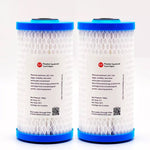
For systems with integrated filtration or refillable filter bottles, the standard replacement cycle for carbon and sediment cartridges is every 6 to 12 months, depending on the turbidity of your local water supply and the volume of water dispensed.
 lee bradley