0 item(s)
View cart
You have no items in your shopping cart.
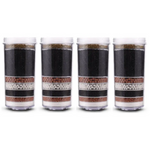
Charcoal filters, commonly referred to as activated carbon filters, contain microscopic carbon particles structured as either dense blocks or loose granules. These materials undergo a specific thermal or chemical treatment to become exceptionally porous. The result is a highly effective medium that is central to modern water filters.
To understand its efficiency, consider its microscopic structure. Just a few grams of activated carbon possess an internal surface area roughly equivalent to a professional football field. This incredible surface area is exactly why activated charcoal is heavily favored for purifying drinking water worldwide.
The primary mechanism behind activated charcoal is a process called adsorption, which differs significantly from absorption. While a sponge absorbs liquids by drawing them into its volume, adsorption occurs when chemical substances adhere firmly to the exterior surface of an adsorbent material.
When contaminated water passes through a charcoal bed, the pollutants do not seep inside the carbon molecules. Instead, they become chemically trapped on the vast surface area of the carbon atoms, unable to escape back into the water stream.
The purifying potential of charcoal is not a modern discovery; historical records indicate ancient Egyptians used rudimentary charcoal to remove unwanted components during bronze manufacturing. Today, the process is highly refined.
By treating standard charcoal with oxygen at extremely high temperatures, billions of tiny pores are forced open between the carbon atoms. This "activation" process vastly expands the surface area available for capturing and storing microscopic pollutants as water flows through the filter bed. The slower the water travels through this carbon bed, the more time it has to trap impurities.

While municipal tap water is treated to meet safety standards, it often picks up various chemicals and compounds on its way to your faucet. Activated carbon is remarkably effective at removing these unwanted elements.
According to studies conducted by environmental protection agencies, high-quality carbon filtration can reduce or completely remove up to 80 different organic pollutants. Here is a breakdown of the primary contaminants it targets:
Chlorine is universally added to municipal water supplies to kill dangerous pathogens. While safe, it frequently leaves water smelling and tasting like a swimming pool. Activated carbon filters excel at this, capable of removing over 95% of residual chlorine, instantly improving the water's taste and odor.
When chlorine reacts with natural organic matter in water, it creates chemical by-products such as Trihalomethanes (THMs). Activated carbon is considered the most effective filtration method for capturing these specific chemical by-products before they reach your glass.
Chemicals used in agriculture, such as weedkillers (herbicides) and pest control sprays, can run off into freshwater sources and groundwater. Activated carbon has been shown to effectively trap up to 14 common pesticides and 12 prevalent herbicides, preventing them from entering household drinking water.
Microplastics are microscopic plastic fragments that have infiltrated global water supplies. Because carbon blocks are extremely dense, they act as a physical barrier, successfully filtering out these tiny particles that are invisible to the naked eye.
PFOS (perfluorooctanesulfonic acid) and PFAS are synthetic chemicals historically used in stain repellents and firefighting foams. These "forever chemicals" have made their way into environmental water resources. Advanced carbon filtration is one of the recommended methods for effectively reducing PFOS and PFOA levels in tap water.
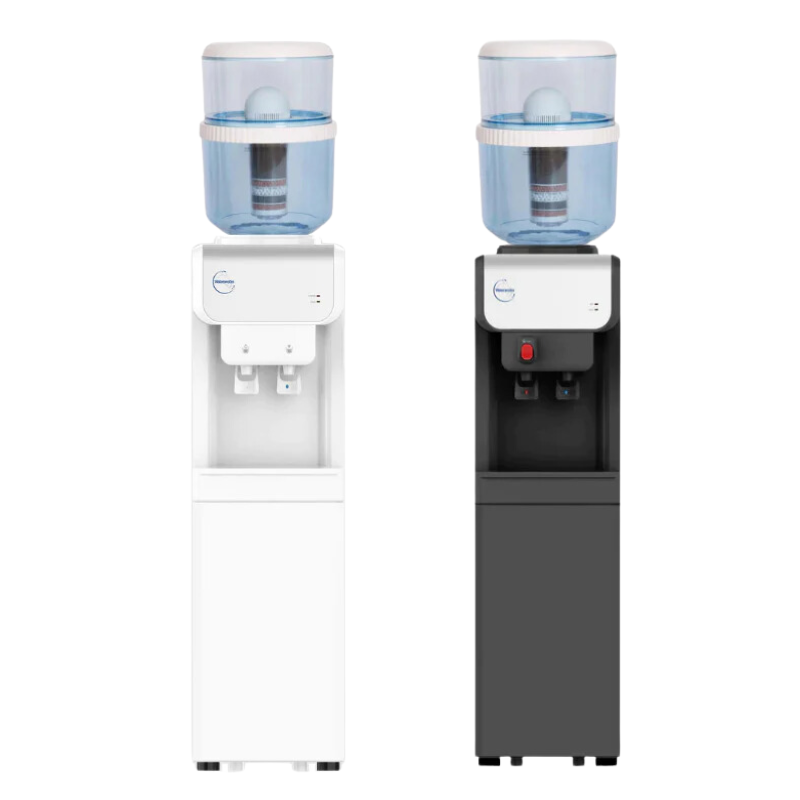
Activated charcoal remains a foundational technology in modern water purification. Whether it is used in a small countertop pitcher or integrated into large bottled water coolers, it provides a reliable, natural method for significantly improving water quality.
By understanding how adsorption targets specific chemicals, households can make informed decisions about their daily hydration safety.
The lifespan of a carbon filter depends on the volume of water processed and the initial quality of the tap water. On average, standard household carbon filters should be replaced every 3 to 6 months to ensure the pores do not become completely saturated with trapped contaminants.
No, standard activated carbon filters are not effective at removing fluoride. Removing fluoride requires more intensive purification methods, such as reverse osmosis systems or water distillers.
While solid carbon blocks can physically trap some larger cysts and parasites, standard carbon filters are not designed to purify water of microscopic bacteria or viruses. Municipal water is already treated for pathogens, but if you are using untreated well water, UV purification should be used alongside carbon filtration.